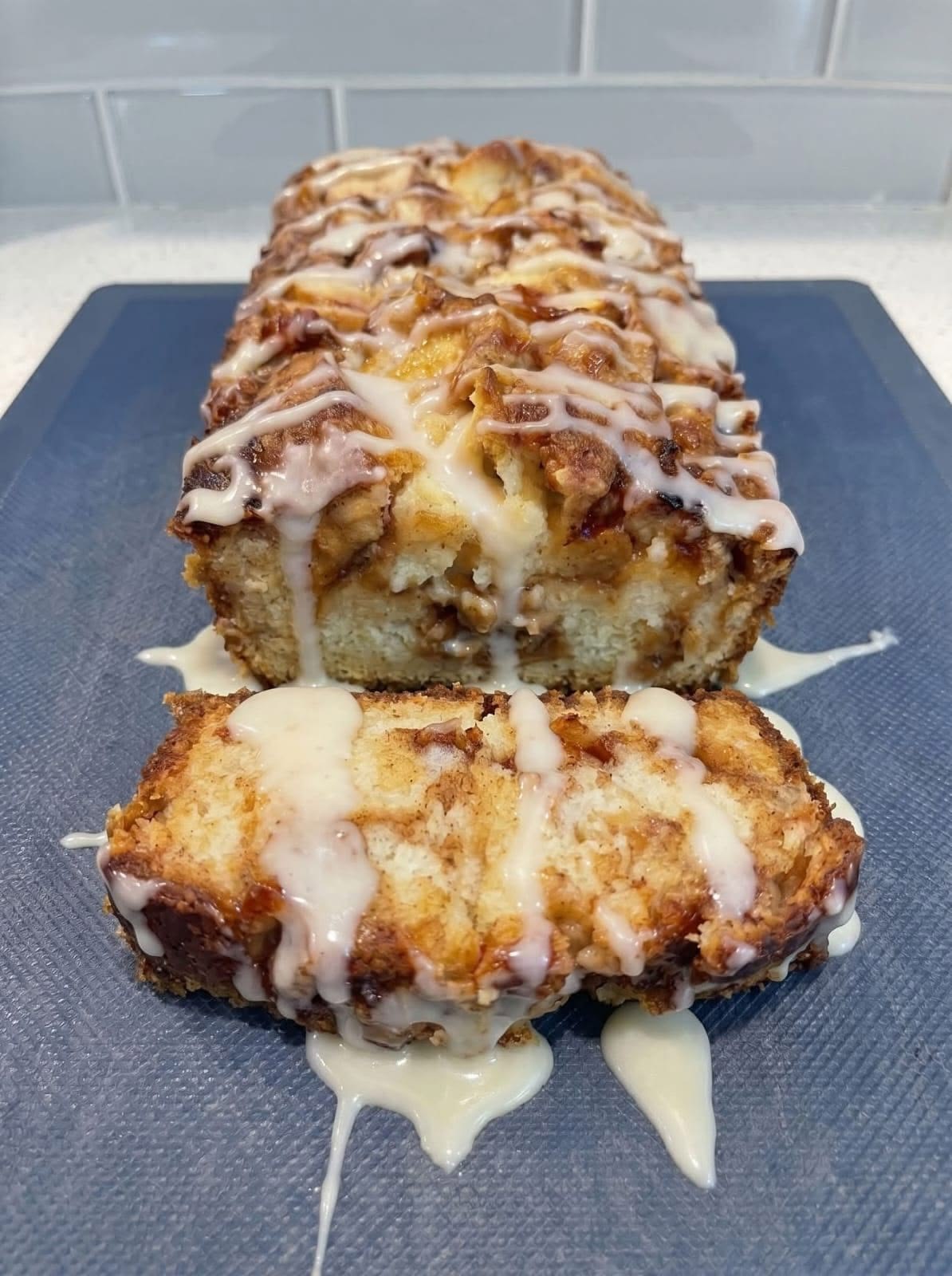
Sourdough Apple Fritter Bread is a delicious combination of soft, naturally fermented sourdough, juicy cinnamon apples, and a sweet vanilla glaze. Inspired by classic apple fritters, this loaf has tender layers of apple filling, warm cinnamon flavor, and a buttery crumb that makes it perfect for breakfast, brunch, or dessert.
Unlike traditional apple fritters, this recipe is baked as a loaf, making it easier to prepare while still delivering those irresistible apple-and-cinnamon flavors. It is also a wonderful way to use an active sourdough starter.
Recipe Details
Prep Time: 30 minutes
Fermentation Time: 8–12 hours
Bake Time: 50–60 minutes
Total Time: About 10–13 hours
Yield: 1 loaf
Servings: 8–10 slices
Ingredients
For the Sourdough Batter
- 100 g active sourdough starter
- 120 g whole milk
- 2 large eggs
- 100 g unsalted butter, softened
- 150 g granulated sugar
- 1 teaspoon vanilla extract
- 250 g all-purpose flour
- 1 teaspoon ground cinnamon
- ½ teaspoon salt
- 1 teaspoon baking powder
For the Apple Filling
- 2 medium apples, peeled and finely diced
- 40 g brown sugar
- 1 tablespoon all-purpose flour
- 1 teaspoon ground cinnamon
- ¼ teaspoon nutmeg
- 1 tablespoon butter
- 1 teaspoon lemon juice
For the Cinnamon Swirl
- 50 g brown sugar
- 1 teaspoon cinnamon
- 1 tablespoon melted butter
For the Glaze
- 100 g powdered sugar
- 1–2 tablespoons milk
- ½ teaspoon vanilla extract
Choosing the Apples
The apples you choose can make a noticeable difference in the finished loaf. Firm apples such as Granny Smith, Honeycrisp, Pink Lady, or Braeburn work particularly well because they maintain some texture during baking.
Avoid cutting the apples into large chunks. Small, evenly diced pieces distribute more easily throughout the bread and cook at the same rate.
Step 1: Prepare the Apple Filling
Begin by preparing the cinnamon apples.
Place the diced apples, brown sugar, flour, cinnamon, nutmeg, butter, and lemon juice in a skillet over medium heat.
Cook for approximately 5–7 minutes, stirring occasionally. The apples should become slightly tender while still retaining some texture.
The flour will help absorb excess apple juices and create a thicker filling.
Remove the skillet from the heat and allow the apple mixture to cool completely.
Cooling the apples before adding them to the batter is important because hot apples can soften the mixture and interfere with the structure of the loaf.
Step 2: Mix the Sourdough Ingredients
In a large bowl, combine the active sourdough starter, softened butter, sugar, eggs, milk, and vanilla extract.
Whisk until the mixture is smooth and creamy.
In a separate bowl, combine the flour, cinnamon, salt, and baking powder.
Gradually add the dry ingredients to the wet ingredients, mixing gently until just combined.
Do not overmix. The batter should be thick but spreadable.
Step 3: Ferment the Batter
Cover the bowl with plastic wrap or a clean kitchen towel.
Allow the mixture to rest at room temperature for several hours.
Because this is a rich sourdough recipe containing butter, sugar, eggs, and milk, fermentation can take longer than a basic sourdough bread recipe.
Allow approximately 6–10 hours, depending on your kitchen temperature and starter activity.
The mixture may not double in size like a traditional bread dough. Instead, look for a slightly increased volume and a lighter, more aerated texture.
Step 4: Prepare the Cinnamon Mixture
While the dough is fermenting, prepare the cinnamon swirl.
Combine the brown sugar and ground cinnamon in a small bowl.
Keep the melted butter separate.
This simple mixture creates pockets of warm cinnamon flavor throughout the loaf.
Step 5: Prepare the Loaf Pan
Grease a standard 9 × 5-inch loaf pan with butter or nonstick spray.
For easier removal, line the pan with parchment paper, leaving some parchment hanging over the sides.
Preheat the oven to 350°F (175°C) when you’re ready to assemble and bake the bread.
Step 6: Assemble the Bread
After fermentation, gently stir the batter to redistribute the ingredients.
Pour approximately half of the batter into the prepared loaf pan.
Spread it evenly with a spatula.
Add approximately half of the cooled cinnamon apple mixture over the batter.
Sprinkle half of the cinnamon-sugar mixture over the apples and drizzle with some melted butter.
Add the remaining batter on top.
Finish with the remaining apples and cinnamon-sugar mixture.
For a classic apple-fritter appearance, gently swirl a butter knife through the batter a few times. Don’t over-swirl, or the layers may disappear.
Step 7: Bake
Place the loaf in the preheated oven and bake for approximately 50–60 minutes.
The top should become golden brown, and a toothpick inserted into the bread portion should come out mostly clean.
Because the loaf contains apples, you may encounter some moisture from the fruit when testing it. Avoid inserting the toothpick directly into a large pocket of apple filling.
If the top becomes brown before the center is fully baked, loosely cover the loaf with aluminum foil during the final 15–20 minutes.
Once baked, remove the loaf from the oven and let it cool in the pan for approximately 15–20 minutes.
Then carefully transfer it to a wire rack.
Step 8: Make the Vanilla Glaze
While the bread cools, prepare the glaze.
Place powdered sugar in a small bowl.
Add milk one teaspoon at a time, stirring after each addition.
Add the vanilla extract and mix until smooth.
The glaze should be thick enough to drizzle but thin enough to flow slowly over the bread.
If it becomes too thin, add more powdered sugar. If it’s too thick, add a few drops of milk.
Step 9: Glaze the Bread
Allow the loaf to cool until it is warm or completely cool.
Drizzle the vanilla glaze generously over the top.
For an authentic apple fritter-style finish, allow the glaze to drip naturally down the sides.
Let the glaze sit for approximately 10 minutes before slicing.
Helpful Tips for Success
Use an Active Sourdough Starter
For the best fermentation and flavor, use a starter that is active, bubbly, and recently fed.
A sluggish starter can result in a heavier loaf.
Don’t Rush Fermentation
Sourdough recipes depend on temperature and starter strength. The times provided are guidelines rather than strict rules.
A warm kitchen will speed fermentation, while a cool kitchen may require additional time.
Don’t Overmix
Once the flour is added, mix only until the ingredients are incorporated. Overmixing can make the finished loaf tougher.
Cook the Apples First
Raw apples release a lot of liquid while baking. Cooking them first helps concentrate their flavor and reduces excess moisture.
Let the Bread Cool
Allow the loaf to cool before slicing. This gives the crumb time to set and makes the apple layers easier to cut.
Variations
You can easily customize this recipe.
Add nuts: Fold chopped pecans or walnuts into the apple mixture.
Add raisins: A small handful of raisins gives the bread an extra fruity sweetness.
Make it extra cinnamon-y: Add a little cinnamon to the glaze.
Add caramel: Drizzle caramel sauce over the finished loaf along with the vanilla glaze.
Use a crumble topping: Combine flour, brown sugar, butter, and cinnamon and sprinkle it over the loaf before baking.
How to Store Sourdough Apple Fritter Bread
Store the completely cooled bread in an airtight container at room temperature for up to 2 days.
For longer storage, refrigerate it for approximately 4–5 days.
Because refrigeration can make the crumb firmer, warm individual slices briefly before serving.
The loaf can also be frozen. Wrap individual slices tightly in plastic wrap and place them in a freezer-safe bag or container. Freeze for up to 2 months.
Thaw overnight in the refrigerator or at room temperature.
How to Serve
Sourdough Apple Fritter Bread is delicious served slightly warm.
Enjoy it with:
- A cup of coffee
- Hot tea
- Whipped cream
- Vanilla ice cream
- Caramel sauce
- Fresh apple slices
- Butter
- Extra cinnamon sugar
It makes an especially wonderful weekend breakfast or afternoon treat.
