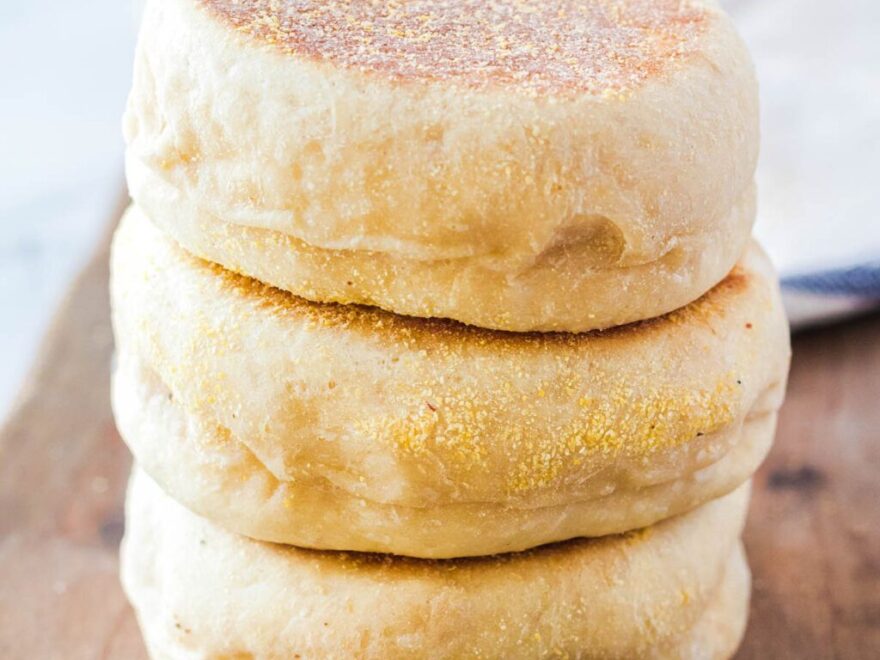
There is something wonderfully satisfying about making homemade English muffins from scratch. These classic English muffins are soft and chewy inside, lightly crisp and golden on the outside, and filled with those signature little air pockets that make them perfect for butter, jam, eggs, or breakfast sandwiches. Unlike traditional bread, English muffins are cooked on a griddle rather than baked in the oven, giving them their distinctive texture and toasted exterior.
This easy recipe uses simple pantry ingredients and requires no special equipment. The dough does need time to rise, but most of that time is hands-off. Once cooked, the muffins can be split with a fork to preserve their deliciously uneven interior.
Prep Time
20 minutes
Rising Time
1 hour 30 minutes to 2 hours
Cook Time
20 minutes
Total Time
About 2 hours 20 minutes
Yield
8–10 English muffins
Ingredients
3 cups (375 g) all-purpose flour
1 tablespoon granulated sugar
2 ¼ teaspoons (1 packet) active dry yeast
1 teaspoon salt
1 cup (240 ml) warm milk
2 tablespoons unsalted butter, melted
1 large egg
2–3 tablespoons cornmeal or semolina, for dusting
A little butter or oil for cooking
Instructions
1. Activate the Yeast
Begin by warming the milk until it feels comfortably warm to the touch, approximately 100–110°F (38–43°C). Avoid making it too hot because excessive heat can damage the yeast.
Pour the warm milk into a large mixing bowl. Add the sugar and active dry yeast. Stir gently and let the mixture stand for about 5–10 minutes.
The yeast should become slightly foamy. This indicates that it is active and ready to use.
2. Make the Dough
Add the melted butter and egg to the yeast mixture and whisk until combined.
In a separate bowl, combine the flour and salt. Gradually add the dry ingredients to the wet mixture, stirring with a wooden spoon or sturdy spatula.
Continue mixing until a soft, slightly sticky dough forms.
The dough should not be extremely wet, but it should feel softer than typical bread dough. If it seems excessively sticky, add flour one tablespoon at a time. Avoid adding too much flour, as this can make the finished muffins heavy instead of light and airy.
- Knead the Dough
Transfer the dough to a lightly floured surface.
Knead it for approximately 6–8 minutes by hand until it becomes smoother and elastic. You can also use a stand mixer fitted with a dough hook and knead on low to medium speed for about 5–6 minutes.
When ready, the dough should feel soft and spring back gently when pressed.
Shape the dough into a ball.
4. First Rise
Lightly grease a clean bowl with a little oil or butter. Place the dough inside and turn it once so the surface is lightly coated.
Cover the bowl with plastic wrap or a clean kitchen towel.
Leave the dough in a warm, draft-free place for approximately 1–1½ hours, or until it has doubled in size.
The exact rising time depends on the temperature of your kitchen. A warmer environment will generally make the dough rise faster.
5. Shape the Muffins
Once the dough has doubled, gently press it down to release some of the excess air.
Transfer it to a lightly floured surface and divide it into 8–10 equal portions.
Shape each portion into a smooth ball. Gently flatten each ball into a thick round approximately ½–¾ inch thick.
Sprinkle a baking sheet or large tray generously with cornmeal or semolina. Place the shaped muffins on top, leaving a little space between each one.
Sprinkle the tops with additional cornmeal or semolina.
Cover the muffins loosely with a clean towel and allow them to rest for another 20–30 minutes.
6. Heat the Griddle
Place a large heavy skillet, cast-iron pan, or griddle over medium-low heat.
Allow it to warm gradually. English muffins need gentle cooking because they are relatively thick. If the pan is too hot, the outside may brown before the center is fully cooked.
Lightly grease the pan with butter or oil.
7. Cook the English Muffins
Carefully place the muffins onto the heated pan, leaving enough room between them so you can flip them easily.
Cook for approximately 5–7 minutes on the first side.
The bottom should become golden brown.
Carefully flip each muffin and cook for another 5–7 minutes.
If the muffins are browning too quickly, reduce the heat to low. You want them to cook slowly enough for the centers to become fully cooked while the outside develops a beautiful golden crust.
For especially thick muffins, you can cover the pan with a lid for a few minutes during cooking. This helps the heat circulate and cook the centers more evenly.
8. Check for Doneness
The muffins should feel firm but slightly springy when gently pressed.
If you have an instant-read thermometer, the center should reach approximately 190–200°F (88–93°C).
If you’re unsure, remove one muffin and carefully split it open. The center should look cooked and soft, with a slightly moist, airy texture—not wet or doughy.
9. Cool Before Splitting
Transfer the cooked English muffins to a wire rack.
Allow them to cool for at least 10–15 minutes before cutting.
For the classic English muffin texture, use a fork to gently pierce around the edge of each muffin and pull it apart rather than slicing straight through with a knife.
This preserves the irregular nooks and crannies inside.
How to Serve English Muffins
Homemade English muffins are incredibly versatile. Serve them warm with butter and your favorite jam for a simple breakfast.
For a savory option, toast them and top with scrambled eggs, cheese, avocado, or smoked salmon.
They are also excellent for breakfast sandwiches. Add a fried egg, cheese, and cooked bacon or sausage between two toasted halves.
For something sweet, spread the muffin with peanut butter, honey, cream cheese, or fruit preserves.
You can even use them as a base for mini pizzas. Add tomato sauce, cheese, and your favorite toppings, then toast until the cheese melts.
Tips for Perfect English Muffins
Use warm, not hot, milk: Very hot milk can interfere with the yeast.
Don’t over-flour the dough: A slightly soft dough produces lighter muffins with better texture.
Give the dough enough time to rise: Proper fermentation helps develop flavor and creates a lighter interior.
Cook over medium-low heat: This is one of the most important steps. Gentle heat allows the centers to cook without burning the outside.
Use cornmeal or semolina: It prevents sticking and gives the muffins their traditional slightly grainy exterior.
Don’t press the muffins while cooking: Pressing them can flatten the air pockets that create their famous texture.
Fork-split them: A fork creates the classic rough, craggy interior that holds butter and other toppings beautifully.
Storage
Once completely cooled, store English muffins in an airtight container or resealable bag at room temperature for up to 3 days.
For longer storage, freeze them for up to 2–3 months. Place parchment paper between the muffins if desired, then store them in a freezer-safe bag.
When you’re ready to eat them, thaw them and toast until warm and crisp.
