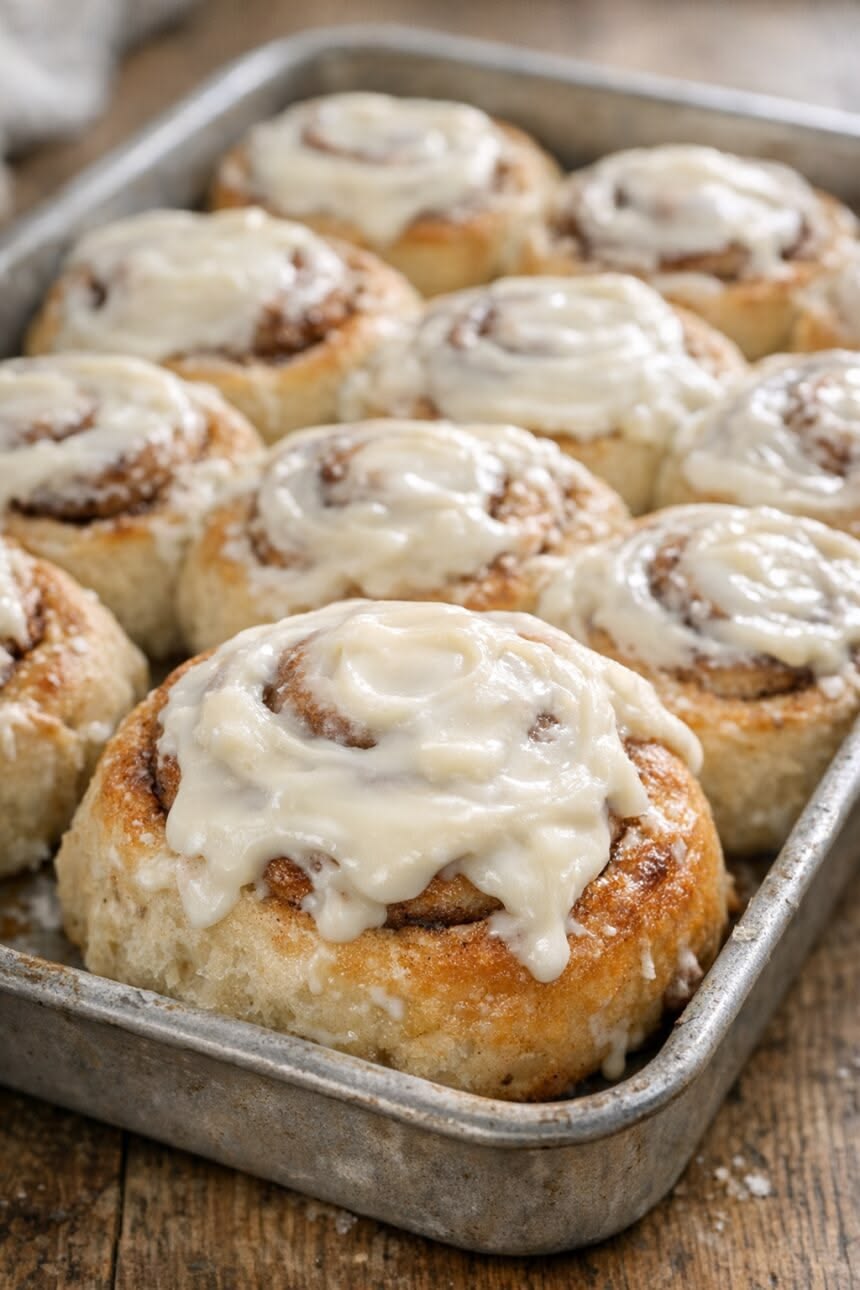
Sourdough cinnamon rolls are soft, fluffy, buttery, and filled with a warm cinnamon-sugar mixture that melts into every layer of the dough. Unlike traditional cinnamon rolls made with commercial yeast, these rolls are naturally leavened with sourdough starter, giving them a wonderfully tender texture and a subtle tang that balances the sweetness.
They are perfect for weekend breakfasts, holiday brunches, family gatherings, or whenever you want something special from the oven. Although sourdough cinnamon rolls take longer because the dough needs time to ferment, most of the process is hands-off. You can prepare the dough in advance, let it ferment overnight, shape the rolls, and bake them fresh the next morning.
Recipe Details
Prep Time: 35 minutes
Fermentation Time: 8–12 hours
Second Rise: 2–4 hours
Cook Time: 25–30 minutes
Total Time: About 12–17 hours
Yield: 12 cinnamon rolls
Servings: 12
Ingredients
For the Dough
- 1 cup whole milk, lukewarm
- ¾ cup active sourdough starter
- 2 large eggs
- ½ cup unsalted butter, melted and slightly cooled
- ¼ cup granulated sugar
- 1 teaspoon vanilla extract
- 4 cups all-purpose or bread flour
- 1 teaspoon salt
For the Cinnamon Filling
- ½ cup unsalted butter, softened
- ¾ cup packed brown sugar
- 2 tablespoons ground cinnamon
- ¼ teaspoon salt
For the Cream Cheese Frosting
- 4 ounces cream cheese, softened
- 2 tablespoons unsalted butter, softened
- 1 cup powdered sugar
- 1 teaspoon vanilla extract
- 1–2 tablespoons milk
Step 1: Prepare the Dough
In a large mixing bowl, combine the lukewarm milk, active sourdough starter, eggs, melted butter, granulated sugar, and vanilla extract.
Whisk until the mixture is smooth and well combined.
Add the flour gradually, mixing with a wooden spoon or sturdy spatula. Once most of the flour has been incorporated, add the salt.
Continue mixing until a soft, slightly sticky dough forms.
The dough should not be excessively wet, but it may feel softer and stickier than ordinary bread dough because of the butter, eggs, and milk.
Step 2: Knead the Dough
Transfer the dough to a lightly floured surface.
Knead it gently for approximately 5–8 minutes, or until it becomes smoother and more elastic.
You can also knead the dough using a stand mixer fitted with a dough hook. Mix on low to medium speed until the dough pulls away from the sides of the bowl and becomes elastic.
Do not add excessive flour while kneading. Too much flour can result in dry, dense cinnamon rolls.
The finished dough should feel soft and supple.
Step 3: Bulk Fermentation
Place the dough in a lightly greased bowl and cover it with plastic wrap, a lid, or a clean kitchen towel.
Allow it to ferment at room temperature for approximately 8–12 hours.
The exact time depends on your kitchen temperature and the strength of your sourdough starter.
The dough should become noticeably larger, smoother, and somewhat puffy. It does not necessarily need to double in size.
For the best results, use an active starter that has been fed and is bubbly before beginning the recipe.
Step 4: Prepare the Cinnamon Filling
While the dough is fermenting, you can prepare the filling ingredients.
In a small bowl, combine the softened butter, brown sugar, ground cinnamon, and salt.
Mix until you have a smooth, spreadable paste.
If the butter is too cold, it will be difficult to spread. If it is melted, however, the filling may leak excessively during shaping. Softened butter gives the best results.
Step 5: Roll Out the Dough
When the dough has finished fermenting, lightly flour your work surface.
Turn the dough onto the surface and gently press it into a rectangle.
Using a rolling pin, roll the dough into approximately a 16 × 12-inch rectangle.
Try to maintain an even thickness throughout.
If the dough resists rolling and springs back, allow it to rest for 10 minutes before continuing. This gives the gluten time to relax.
Step 6: Add the Filling
Spread the cinnamon-butter mixture evenly over the entire surface of the dough.
Leave a small border around the edges so the filling does not squeeze out too much when you roll it.
Make sure the filling reaches the corners as evenly as possible.
For extra cinnamon flavor, you can sprinkle a little additional cinnamon over the filling.
Step 7: Roll the Dough
Starting from one of the long sides, carefully roll the dough into a tight log.
Try to roll it evenly without squeezing the dough too aggressively.
Once you reach the opposite edge, gently pinch the seam closed.
Use a sharp knife or unflavored dental floss to divide the log into 12 equal pieces.
A sharp knife helps prevent the rolls from becoming flattened.
For especially neat slices, mark the log into 12 sections first and then cut.
Step 8: Arrange the Cinnamon Rolls
Grease a 9 × 13-inch baking dish with butter.
Arrange the 12 rolls in the dish, leaving a little space between them.
Cover the dish loosely with plastic wrap or a clean towel.
Allow the rolls to undergo their second rise for approximately 2–4 hours at room temperature.
They should become visibly puffy and soft. The rolls do not necessarily need to double in size.
If your kitchen is cool, the second rise may take longer.
Step 9: Preheat the Oven
When the rolls look properly risen, preheat your oven to 350°F (175°C).
Let the oven fully preheat before baking.
For especially soft rolls, you can brush a little milk or heavy cream over the tops immediately before placing them in the oven.
This is optional but can help create a tender, rich finish
Step 10: Bake the Rolls
Place the baking dish in the center of the preheated oven.
Bake for approximately 25–30 minutes, or until the tops are lightly golden brown and the centers are cooked through.
Avoid overbaking the rolls. If they become deeply brown, they may lose some of their soft texture.
If the tops are browning too quickly, loosely cover the dish with aluminum foil during the final portion of baking.
Remove the cinnamon rolls from the oven and allow them to cool for about 10–15 minutes before frosting.
Step 11: Make the Cream Cheese Frosting
While the rolls are cooling, prepare the frosting.
Beat the softened cream cheese and butter together until smooth and creamy.
Add the powdered sugar and vanilla extract.
Beat until fully combined.
Add 1 tablespoon of milk and mix. If the frosting is too thick, add another tablespoon of milk until it reaches a smooth, spreadable consistency.
For a thicker frosting, use less milk.
Step 12: Frost and Serve
Spread the cream cheese frosting generously over the warm cinnamon rolls.
The warmth of the rolls will slightly melt the frosting, allowing it to spread beautifully into the swirls.
For an extra attractive presentation, sprinkle a little cinnamon over the top.
Serve the rolls warm with coffee, tea, or your favorite breakfast drink.
Tips for Perfect Sourdough Cinnamon Rolls
Use an active starter: A strong, bubbly starter helps the dough rise properly.
Watch the dough, not just the clock: Fermentation times vary depending on room temperature and starter activity.
Do not add too much flour: Slightly sticky dough produces softer rolls.
Roll tightly but gently: A firm roll helps create beautiful spirals without crushing the dough.
Cut evenly: Similar-sized rolls bake more evenly.
Do not overbake: Remove the rolls once they are lightly golden and cooked through.
Allow them to cool slightly: Frosting very hot rolls can cause it to melt completely.
Overnight Cinnamon Rolls
For an easier morning, prepare and shape the cinnamon rolls in the evening.
After arranging them in the baking dish, cover the dish tightly and refrigerate overnight.
The next morning, remove the rolls from the refrigerator and allow them to sit at room temperature for approximately 1–3 hours, depending on how much they have risen.
Once they look puffy, bake as directed.
This method is perfect for holidays and weekend breakfasts because you can do most of the work the night before.
Storage
Store leftover cinnamon rolls in an airtight container.
Because they contain cream cheese frosting, refrigerate them for up to 4–5 days.
To serve, warm individual rolls in the microwave for about 10–20 seconds, or reheat them gently in a low-temperature oven.
You can also freeze unfrosted baked rolls for up to 2–3 months. Wrap them tightly before freezing and thaw them before reheating.
