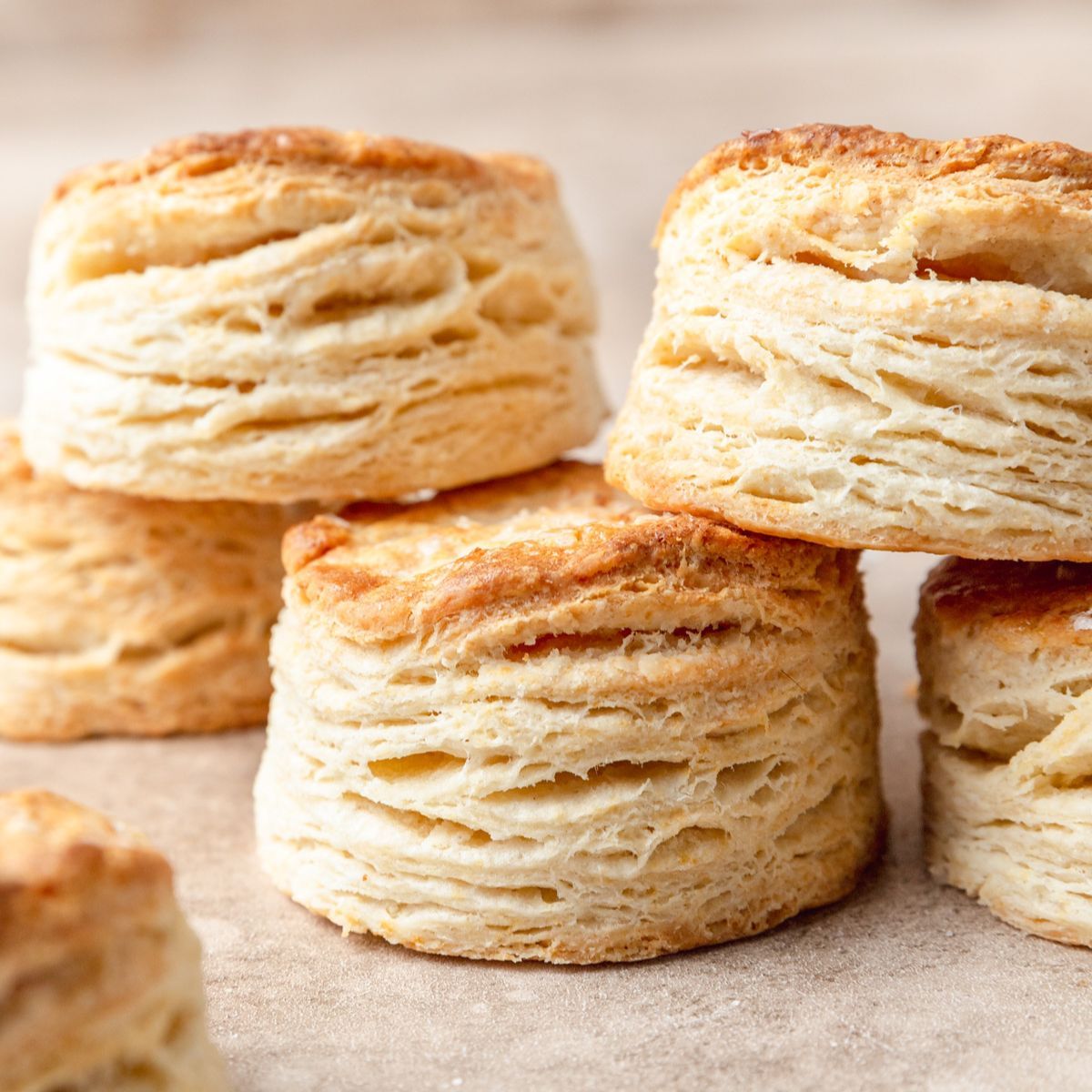
There is nothing quite like a batch of warm, homemade Buttermilk Biscuits. These classic Southern-style biscuits are golden and lightly crisp on the outside while remaining soft, fluffy, and wonderfully tender inside. Made with simple pantry ingredients and cold butter, they are an easy addition to breakfast, brunch, dinner, or holiday meals.
The secret to great buttermilk biscuits is keeping the butter cold and handling the dough gently. When the cold butter hits the hot oven, it creates steam that helps form flaky layers. Buttermilk adds moisture, tenderness, and a subtle tang that balances the richness of the butter.
Serve these biscuits warm with butter and honey, use them for breakfast sandwiches, or pair them with sausage gravy, fried chicken, soups, or stews. Once you learn this simple method, you’ll never need to rely on canned biscuits again.
Recipe Details
Prep Time: 15 minutes
Cook Time: 12–16 minutes
Total Time: About 30 minutes
Yield: 10–12 biscuits
Serving Size: 1 biscuit
Ingredients
- 300 g all-purpose flour
- 1 tablespoon baking powder
- ½ teaspoon baking soda
- 1 teaspoon salt
- 1 tablespoon granulated sugar, optional
- 115 g cold unsalted butter
- 240 ml cold buttermilk
- 2 tablespoons melted butter, for brushing
Optional Ingredients
- ½ teaspoon garlic powder for savory biscuits
- 1 teaspoon dried herbs
- 75 g shredded cheddar cheese
- 1–2 tablespoons honey for a slightly sweeter biscuit
Equipment
You will need:
- Large mixing bowl
- Pastry cutter or fork
- Measuring cups and spoons
- Rolling pin, optional
- Biscuit cutter
- Baking sheet
- Parchment paper
- Pastry brush
- Wire cooling rack
Step 1: Preheat the Oven
Preheat your oven to 425°F (220°C).
Line a baking sheet with parchment paper.
A hot oven is essential for good biscuits. The high temperature quickly melts the butter and creates steam, helping the biscuits rise and develop flaky layers.
If you have time, place the prepared baking sheet in the refrigerator while making the dough. A cold baking surface helps keep the butter firm.
Step 2: Combine the Dry Ingredients
In a large mixing bowl, whisk together the flour, baking powder, baking soda, salt, and sugar if using.
Make sure the ingredients are evenly distributed.
Baking powder and baking soda provide the lift needed to make the biscuits light and fluffy. The buttermilk reacts with the baking soda, helping the biscuits rise while adding a subtle tang.
Step 3: Cut in the Cold Butter
Cut the cold butter into small cubes.
Add the butter to the flour mixture.
Using a pastry cutter, fork, or your fingertips, work the butter into the flour until you have a coarse, crumbly mixture.
The most important part is to leave some small pieces of butter intact. You should see pieces ranging from tiny crumbs to roughly pea-sized pieces.
These butter pockets are what create flaky layers.
Avoid working the butter so much that it completely disappears into the flour.
Step 4: Add the Buttermilk
Make a well in the center of the flour mixture.
Pour in the cold buttermilk.
Using a wooden spoon or rubber spatula, gently stir until the dough just comes together.
The dough should look slightly shaggy and may have a few dry spots.
Do not overmix.
If the dough seems extremely dry, add another tablespoon of buttermilk at a time until it comes together.
If the dough feels slightly sticky, that’s perfectly fine. Resist the temptation to add lots of extra flour.
Step 5: Turn Out the Dough
Lightly flour your work surface.
Transfer the dough onto the surface.
Gently bring the dough together with your hands.
Don’t knead it like bread dough. Too much handling can develop gluten and make the biscuits tough.
Instead, gently press the dough into a rectangle.
Step 6: Create Flaky Layers
This is the key step for tall, flaky biscuits.
Fold the dough in half, then gently press it down.
Rotate the dough and fold it again.
Repeat this process approximately 3–4 times.
Each fold creates additional layers of butter and dough.
Finally, gently press the dough into a rectangle approximately ¾ to 1 inch thick.
For taller biscuits, keep the dough closer to 1 inch thick.
Step 7: Cut the Biscuits
Dip a biscuit cutter into a little flour.
Press the cutter straight down into the dough.
Do not twist the cutter.
Twisting can seal the edges of the dough and prevent the biscuits from rising properly.
Place the cut biscuits onto the prepared baking sheet.
Arrange them close together for softer sides, or leave a little space between them if you prefer crispier edges.
Gather the scraps and gently press them together to cut a few additional biscuits.
Try not to repeatedly knead the scraps because this can make the final biscuits tougher.
Step 8: Chill the Biscuits
For especially flaky biscuits, place the baking sheet in the refrigerator for 10–15 minutes before baking.
This step gives the butter a chance to firm up again.
It is particularly helpful if your kitchen is warm or if the dough became soft during shaping.
Step 9: Brush and Bake
Brush the tops of the biscuits with melted butter.
Place the baking sheet in the preheated oven.
Bake for approximately 12–16 minutes, or until the biscuits have risen and developed a beautiful golden-brown top.
The exact baking time depends on the size and thickness of your biscuits.
Don’t open the oven repeatedly while they are baking because this can cause the oven temperature to drop.
Step 10: Finish with Butter
Remove the biscuits from the oven.
Immediately brush the tops with a little additional melted butter if desired.
This gives them a glossy finish and adds even more buttery flavor.
Let them cool for about 5 minutes before serving.
They are best served warm.
Tips for Perfect Buttermilk Biscuits
Keep Everything Cold
Cold butter and cold buttermilk are essential for flaky biscuits.
If your kitchen is warm, consider chilling the flour, bowl, and butter before beginning.
Don’t Overwork the Dough
The less you handle the dough, the more tender the biscuits will be.
Mix only until the ingredients come together.
Leave Butter Pieces
Don’t completely blend the butter into the flour.
Small pieces of cold butter create flaky layers when they melt in the oven.
Don’t Twist the Cutter
Always press the biscuit cutter straight down and lift it straight back up.
This helps the biscuits rise evenly.
Use a Sharp Cutter
A sharp-edged biscuit cutter produces cleaner sides and better rise than a dull cutter or glass.
Bake Immediately
Once the biscuits are shaped and chilled, bake them in a fully preheated oven.
A hot oven helps produce maximum rise.
Homemade Buttermilk Substitute
If you don’t have buttermilk, you can make a simple substitute.
Add 1 tablespoon of lemon juice or white vinegar to a measuring cup.
Pour in enough milk to reach 240 ml.
Stir and let the mixture sit for approximately 5–10 minutes.
It may look slightly curdled. That’s normal.
Use it as a substitute for buttermilk in the recipe.
Delicious Variations
Cheddar Buttermilk Biscuits
Add 75 g of shredded sharp cheddar cheese to the dry ingredients. These are excellent alongside soups and chili.
Garlic Herb Biscuits
Add garlic powder, dried parsley, rosemary, or thyme to the flour mixture.
Brush the baked biscuits with garlic butter for extra flavor.
Honey Buttermilk Biscuits
Add 1–2 tablespoons of honey to the buttermilk before mixing.
These are delicious with butter or fruit preserves.
Jalapeño Cheddar Biscuits
Add chopped jalapeños and shredded cheddar cheese for a spicy, savory variation.
Bacon Biscuits
Fold cooked, crumbled bacon into the dough along with shredded cheddar cheese.
How to Store
Store cooled biscuits in an airtight container at room temperature for up to 2 days.
For longer storage, refrigerate them for up to 5 days.
Reheat biscuits in a 350°F (175°C) oven for several minutes to restore their warmth and crisp exterior.
You can also freeze baked biscuits for up to 3 months.
For best results, wrap them individually and place them in a freezer-safe bag or container.
Unbaked biscuit dough can also be frozen. Cut the biscuits, freeze them on a tray, then transfer them to a freezer bag. Bake from frozen, adding a few extra minutes to the baking time.
Serving Suggestions
Serve warm Buttermilk Biscuits with butter, honey, jam, or fruit preserves for breakfast.
For a classic savory meal, serve them with sausage or mushroom gravy.
They also pair wonderfully with fried chicken, roasted chicken, soups, stews, chili, and barbecue.
You can split them open and fill them with scrambled eggs, cheese, sausage, bacon, or ham to create delicious breakfast sandwiches.
