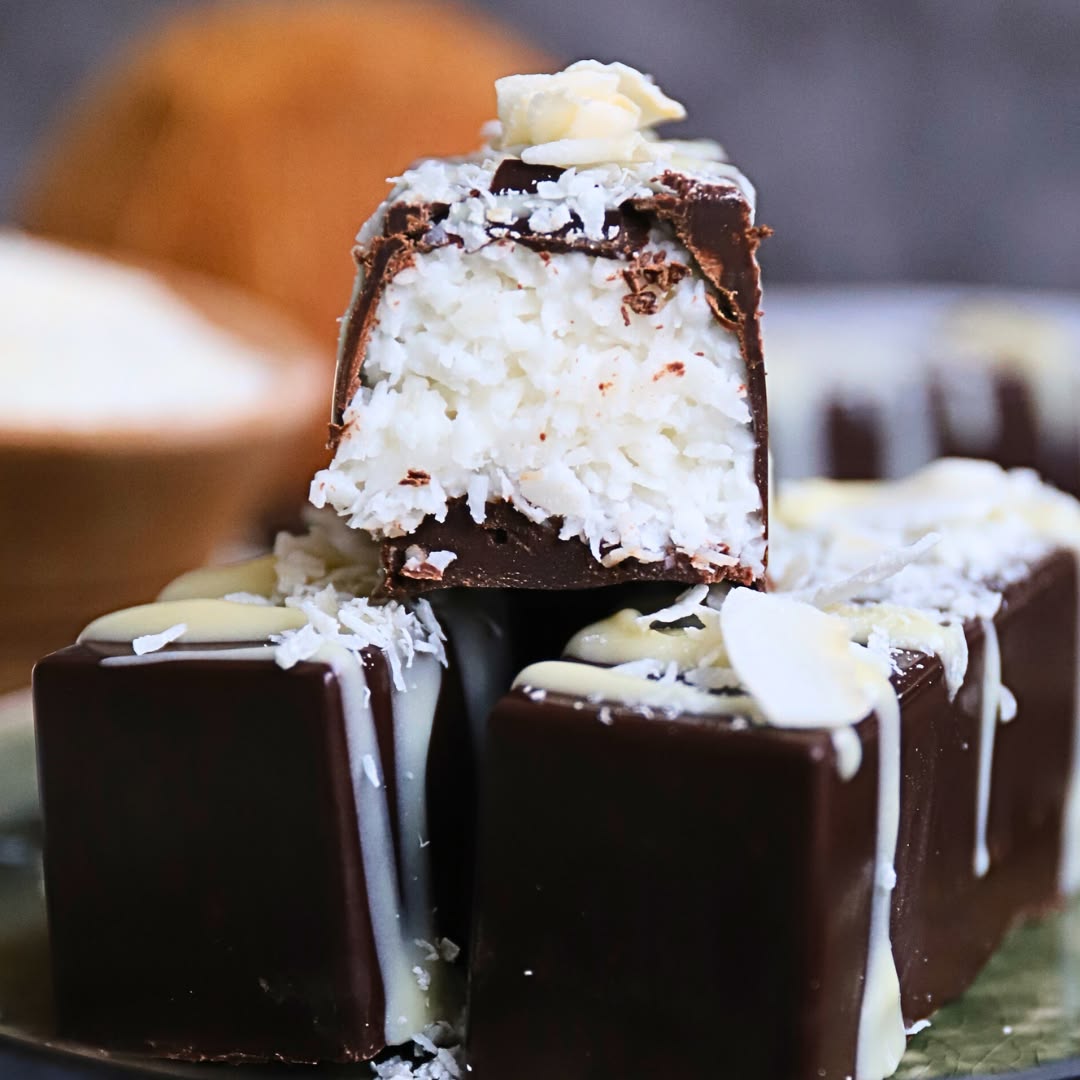
If you love the combination of rich chocolate and creamy coconut but want a simple low-carb treat, these Low-Carb Coconut Chocolate Bites are the perfect choice. They are easy to prepare, require only a handful of ingredients, and make a delicious snack or dessert whenever a chocolate craving strikes.
These little bites have a soft, chewy coconut center covered in a smooth layer of chocolate. Unsweetened shredded coconut provides plenty of natural coconut flavor, while sugar-free chocolate keeps the carbohydrate count lower than traditional coconut candy. A touch of vanilla and a pinch of salt balance the sweetness and make the chocolate flavor stand out.
Whether you’re looking for a quick homemade snack, a make-ahead dessert, or a sweet treat for a low-carb lifestyle, these coconut chocolate bites are worth adding to your recipe collection.
Recipe Details
Prep Time: 15 minutes
Chill Time: 30–45 minutes
Cook Time: 5 minutes
Total Time: About 1 hour
Yield: 18–20 bites
Difficulty: Easy
Ingredients
For the Coconut Filling
- 2 cups unsweetened shredded coconut
- ½ cup unsweetened coconut cream
- 2 tablespoons melted coconut oil
- 2–3 tablespoons powdered low-carb sweetener
- 1 teaspoon vanilla extract
- ¼ teaspoon salt
For the Chocolate Coating
- 6 ounces sugar-free dark chocolate or low-carb chocolate
- 1 tablespoon coconut oil
- ½ teaspoon vanilla extract, optional
- A small pinch of sea salt, optional
Optional Toppings
- Unsweetened shredded coconut
- Chopped almonds
- Crushed pecans
- Unsweetened cocoa powder
- Flaked sea salt
- Sugar-free chocolate drizzle
Why You’ll Love These Coconut Chocolate Bites
There are plenty of reasons to keep this recipe handy. First, the bites require very little preparation. There is no complicated baking process, and the coconut mixture comes together in just a few minutes.
They are also easy to customize. You can make them more chocolatey, add nuts for crunch, or sprinkle them with sea salt for a sweet-and-salty combination.
Most importantly, they are portion-sized. Instead of making a large dessert, you can prepare small individual bites and keep them refrigerated for whenever you want something sweet.
Step 1: Prepare the Coconut Mixture
Start by placing the unsweetened shredded coconut in a medium mixing bowl.
Add the coconut cream, melted coconut oil, powdered low-carb sweetener, vanilla extract, and salt.
Stir everything together until the coconut is evenly coated and the mixture begins to hold together when pressed.
The texture should be moist but not runny. If it feels too dry, add another teaspoon of coconut cream. If it seems too wet, add a little more shredded coconut.
Taste a small amount and adjust the sweetness if necessary.
Remember that the chocolate coating will add another layer of flavor, so the coconut filling doesn’t need to be extremely sweet.
Step 2: Shape the Bites
Line a baking sheet or large plate with parchment paper.
Using a tablespoon or small cookie scoop, portion the coconut mixture into approximately 18–20 equal portions.
Roll each portion between your palms to form small balls. Alternatively, you can press the mixture into small rectangular bars if you prefer a candy-bar style.
Place each shaped bite onto the prepared parchment.
If the mixture feels too soft to shape, refrigerate it for approximately 10–15 minutes before rolling.
Once all the bites have been shaped, place the tray in the refrigerator for about 20–30 minutes. Chilling helps the coconut mixture become firm enough to dip into chocolate.
Step 3: Melt the Chocolate
While the coconut bites are chilling, prepare the chocolate coating.
Break the sugar-free chocolate into small pieces and place it in a microwave-safe bowl. Add the coconut oil.
Microwave in 15–20 second intervals, stirring thoroughly after each interval until the chocolate is completely smooth.
Alternatively, melt the chocolate using a double boiler. Place the chocolate and coconut oil in a heatproof bowl over a saucepan containing gently simmering water. Stir frequently until melted.
Be careful not to allow water or steam to get into the chocolate, as this can cause it to seize.
Once melted, stir in vanilla extract if desired.
Step 4: Coat the Coconut Bites
Remove the chilled coconut bites from the refrigerator.
Using a fork or dipping tool, carefully place one bite into the melted chocolate. Turn it gently until completely coated.
Lift it out and allow excess chocolate to drip back into the bowl.
Place the chocolate-covered bite onto the parchment-lined tray.
Repeat with the remaining coconut bites.
If the chocolate begins to thicken while you’re working, gently warm it again for a few seconds and stir until smooth.
Step 5: Add Toppings
While the chocolate coating is still wet, add any toppings you like.
A small sprinkle of unsweetened shredded coconut creates an attractive finish and adds extra coconut flavor.
Chopped almonds or pecans provide a pleasant crunch, while a tiny pinch of flaky sea salt creates a delicious contrast with the chocolate.
You can also drizzle additional melted chocolate over the finished bites for a decorative appearance.
Step 6: Chill Until Firm
Place the tray in the refrigerator for approximately 20–30 minutes, or until the chocolate coating has completely hardened.
Once firm, transfer the bites to an airtight container.
If you prefer a firmer texture, you can leave them refrigerated for a little longer before serving.
Tips for the Best Coconut Chocolate Bites
Use unsweetened coconut: Sweetened coconut can significantly increase the sugar and carbohydrate content and may make the bites excessively sweet.
Choose your chocolate carefully: Sugar-free chocolate products can vary considerably in their ingredients and carbohydrate content. Check the nutrition label and choose a product that fits your dietary needs.
Use powdered sweetener: Powdered low-carb sweetener generally blends more smoothly into the coconut mixture than granulated varieties.
Don’t make the filling too wet: A moist mixture is ideal, but excessive liquid can make the bites difficult to shape and coat.
Chill before dipping: Cold coconut bites are much easier to coat with melted chocolate.
Work quickly: The chocolate coating can begin to set as it comes into contact with the chilled bites.
Delicious Variations
Almond Coconut Bites
Add 2–3 tablespoons of finely chopped almonds to the coconut mixture. You can also place a whole roasted almond in the center of each bite before coating it with chocolate.
Chocolate Coconut Bites
For a richer chocolate flavor, mix 1 tablespoon of unsweetened cocoa powder into the coconut filling.
Salted Coconut Chocolate Bites
Finish each chocolate-covered bite with a tiny sprinkle of flaky sea salt. The salty finish complements the rich chocolate beautifully.
Peanut Butter Coconut Bites
Add a tablespoon or two of natural peanut butter to the coconut mixture. Make sure the peanut butter contains no added sugar if keeping the recipe low-carb is important.
Dark Chocolate Version
Use a high-cocoa-content sugar-free dark chocolate coating for a deeper, less sweet flavor
Storage
Store the finished Low-Carb Coconut Chocolate Bites in an airtight container in the refrigerator.
They are best served chilled or allowed to sit at room temperature for several minutes before eating. Keeping them refrigerated helps maintain the firm chocolate coating and prevents the coconut filling from becoming too soft.
You can also freeze the bites. Arrange them in a single layer until frozen, then transfer them to a freezer-safe container. Separate layers with parchment paper to prevent sticking.
Allow frozen bites to thaw in the refrigerator before serving.
Serving Ideas
These coconut chocolate bites are perfect with coffee or tea. Serve a few on a dessert plate after dinner or add them to a snack box for a convenient homemade treat.
They also make an attractive addition to a holiday dessert platter. Place them alongside nuts, berries, sugar-free cookies, and other low-carb treats.
For parties, arrange the bites in mini paper candy cups. This makes them easy for guests to pick up and gives them a polished presentation.
Nutrition Note
The exact carbohydrate content will depend on the specific chocolate, coconut cream, sweetener, and other ingredients you use. For a low-carb version, choose unsweetened coconut and chocolate with minimal added sugar, and check the nutrition labels of packaged ingredients.
If you are following a medically prescribed diet, calculate the nutrition information using the exact brands and quantities used in your recipe.
