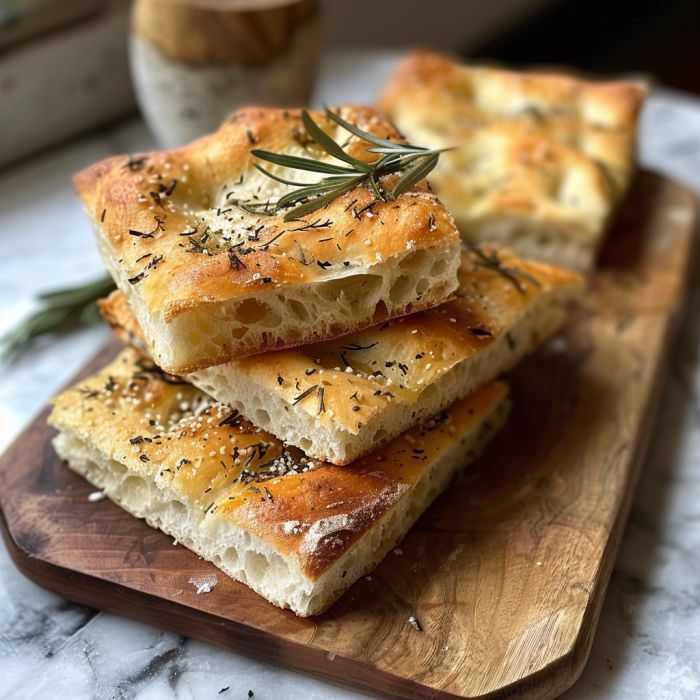
Sourdough focaccia is a wonderfully soft, airy, and flavorful Italian-style bread with a crisp, golden bottom and a generous coating of olive oil. The surface is covered with characteristic dimples that hold olive oil, herbs, and other delicious toppings. Using sourdough starter instead of commercial yeast gives the focaccia a subtle tang and beautifully developed flavor.
This recipe is simple enough for beginner bakers but produces impressive results. The dough is mixed with plenty of water and olive oil, strengthened with gentle folds, fermented until airy, and baked in a generously oiled pan. The result is a fluffy interior surrounded by crisp, golden edges.
Sourdough focaccia is excellent served as an appetizer, alongside soup or salad, or sliced horizontally to make sandwiches.
Recipe Details
Prep Time: 25 minutes
Fermentation Time: 8–12 hours
Second Rise: 2–4 hours
Cook Time: 25–30 minutes
Total Time: About 11–17 hours
Yield: 1 large focaccia
Servings: 8–10 pieces
Ingredients
For the Dough
- 500 grams bread flour
- 400 grams lukewarm water
- 100 grams active sourdough starter
- 10 grams fine sea salt
- 30 grams extra-virgin olive oil
For the Pan and Topping
- 3–4 tablespoons extra-virgin olive oil
- 1–2 tablespoons flaky sea salt
- Fresh rosemary
- Fresh thyme, optional
- Black pepper, optional
Optional Toppings
- Cherry tomatoes
- Thinly sliced red onion
- Sliced olives
- Roasted garlic
- Jalapeños
- Caramelized onions
- Parmesan cheese
- Fresh basil
Step 1: Prepare the Sourdough Starter
For the best results, use an active sourdough starter that is bubbly and strong.
Feed your starter several hours before beginning the recipe. It should become noticeably active and rise after feeding.
A strong starter is particularly important for focaccia because the dough contains a high amount of water and needs good fermentation activity to develop its airy structure.
Step 2: Mix the Dough
Add the lukewarm water and active sourdough starter to a large mixing bowl.
Stir gently until the starter is mostly dispersed throughout the water.
Add the bread flour and mix with your hands or a sturdy spoon until no dry flour remains.
The dough will look rough, sticky, and loose. This is completely normal.
Cover the bowl and let the mixture rest for approximately 30 minutes.
This resting period allows the flour to absorb the water and helps gluten development begin naturally.
Step 3: Add Salt and Olive Oil
After the initial rest, sprinkle the salt over the dough.
Add the olive oil.
Use your wet hands to gently squeeze and fold the dough until the salt and oil are evenly incorporated.
The dough will remain quite sticky, but it should gradually become smoother.
Avoid adding large amounts of flour. Focaccia dough is supposed to have high hydration, which is what helps create its characteristic open, airy crumb.
Step 4: Stretch and Fold
Over the next 2 hours, perform several rounds of stretch-and-folds.
Every 30 minutes, wet your hands and grab one side of the dough.
Stretch it gently upward and fold it toward the center.
Rotate the bowl and repeat on all four sides.
Cover the bowl after each round.
After several sets, you should notice that the dough becomes stronger, smoother, and more elastic.
If the dough is still extremely loose, continue with another gentle fold or two rather than adding flour.
Step 5: Bulk Fermentation
Cover the dough and allow it to ferment at room temperature for approximately 6–10 hours, depending on the temperature of your kitchen and the activity of your starter.
Look for signs rather than relying solely on the clock.
The dough should become noticeably larger and very bubbly. It may jiggle when the bowl is gently moved.
You do not necessarily need to wait for it to double. An increase of around 50–75 percent with plenty of bubbles is usually a good indication that fermentation is progressing well.
Avoid over-fermenting the dough because excessively fermented dough may become weak and difficult to handle.
Step 6: Prepare the Baking Pan
Choose a metal baking pan or casserole dish approximately 9 × 13 inches in size.
Pour 2–3 tablespoons of olive oil into the pan and spread it across the bottom and sides.
Be generous with the oil. It helps prevent sticking and contributes to the crispy, flavorful bottom of the focaccia.
Carefully transfer the fermented dough into the pan.
Use oiled or wet hands to gently spread the dough toward the corners.
Do not force it if it resists. Let it rest for 15–20 minutes and then gently stretch it again.
Step 7: Second Rise
Cover the pan loosely with plastic wrap or a clean towel.
Allow the dough to rise for approximately 2–4 hours.
The dough should become puffy and airy, with bubbles visible across the surface.
If your kitchen is cool, it may take longer.
You can also place the covered pan in the refrigerator overnight for a slower fermentation. If refrigerated, allow the dough to warm and become puffy before baking.
Step 8: Create the Focaccia Dimples
Once the dough has risen, preheat your oven to 425°F (220°C).
Pour another tablespoon or two of olive oil over the surface of the dough.
Generously oil your fingertips.
Press your fingertips straight down into the dough, creating deep dimples across the entire surface.
Do not press all the way through to the bottom of the pan.
The dimples are one of the defining characteristics of focaccia. They also create little pockets where olive oil and toppings can collect.
Step 9: Add Toppings
Sprinkle flaky sea salt generously over the dough.
Add fresh rosemary and thyme if desired.
For a colorful focaccia, arrange cherry tomatoes, sliced red onion, olives, roasted garlic, or other toppings across the surface.
If using heavier toppings, press them gently into the dough so they remain in place during baking.
Finish with another drizzle of extra-virgin olive oil.
Step 10: Bake
Place the focaccia in the fully preheated oven.
Bake for approximately 25–30 minutes, or until the surface is deeply golden brown and the edges are crisp.
If you want a darker, crunchier top, bake for a few additional minutes while watching carefully.
The bottom should be golden and crisp while the inside remains soft and airy.
Remove the focaccia from the oven and immediately drizzle it with a little more olive oil if desired.
Step 11: Cool
Allow the focaccia to cool in the pan for approximately 10–15 minutes.
Carefully transfer it to a wire rack or cutting board.
Let it cool slightly before slicing.
Focaccia is delicious while still warm, but allowing it to cool briefly helps the interior finish setting.
Cut it into squares or rectangles and serve.
Tips for Perfect Sourdough Focaccia
Use an active starter: A bubbly starter is essential for good fermentation.
Do not add too much flour: The wet dough is intentional and creates a lighter crumb.
Use plenty of olive oil: Olive oil contributes flavor, crispness, and prevents sticking.
Wet your hands: Water or oil makes the sticky dough much easier to handle.
Watch the fermentation: Temperature can dramatically change fermentation time.
Be gentle: Avoid aggressively deflating the dough after fermentation.
Dimple generously: Deep dimples help create the classic focaccia appearance and texture.
Bake thoroughly: A deeply golden crust provides the best contrast with the soft interior.
Flavor Variations
There are countless ways to customize sourdough focaccia.
For a classic rosemary version, use plenty of fresh rosemary, flaky salt, and extra-virgin olive oil.
For tomato focaccia, press halved cherry tomatoes into the dough before baking.
For an olive version, scatter green and black olives over the surface.
Roasted garlic and Parmesan create a rich and savory focaccia.
Caramelized onions pair beautifully with rosemary and thyme.
You can also make a colorful garden focaccia by arranging vegetables and herbs into decorative patterns before baking.
Serving Suggestions
Serve sourdough focaccia warm as an appetizer with olive oil for dipping.
It pairs beautifully with soups, salads, roasted vegetables, pasta, and grilled meats.
You can also slice the focaccia horizontally and use it to make sandwiches.
Fill it with mozzarella, tomatoes, basil, chicken, roasted vegetables, or your favorite deli ingredients.
Fresh focaccia also makes an excellent addition to a brunch or family dinner.
Storage
Store leftover focaccia in an airtight container at room temperature for up to 2 days.
For longer storage, wrap it tightly and freeze for up to 2–3 months.
To reheat, place the focaccia in a hot oven for several minutes. This helps restore the crisp edges and soft interior.
Avoid prolonged microwave heating because it can make the bread chewy.
